
Our 3 main businesses
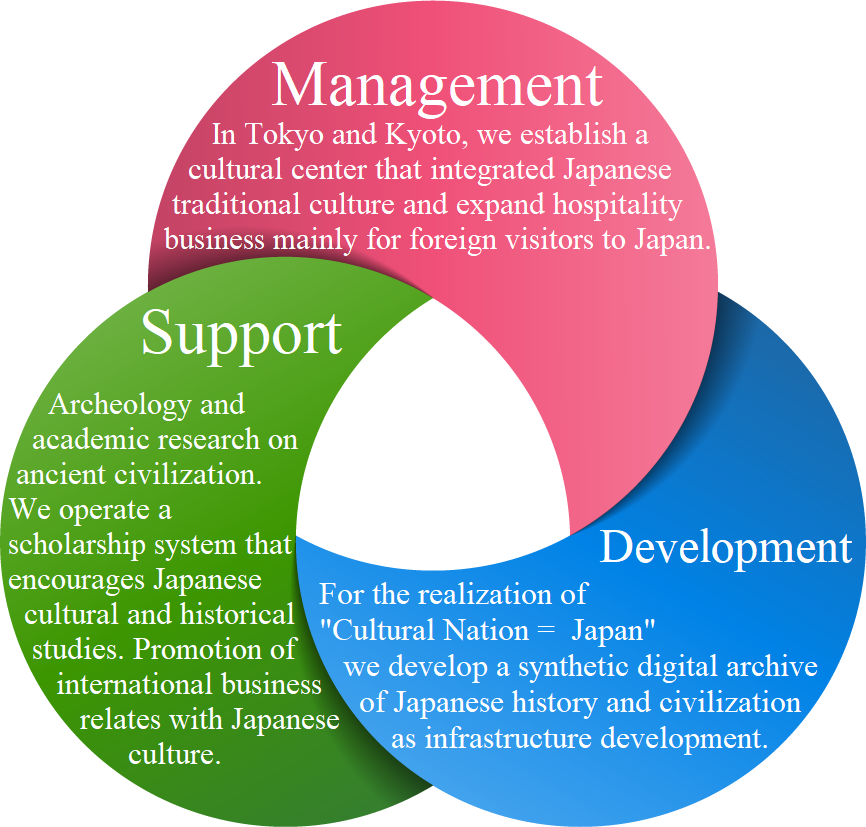
Management
Establishment of a base for transmitting Japanese culture
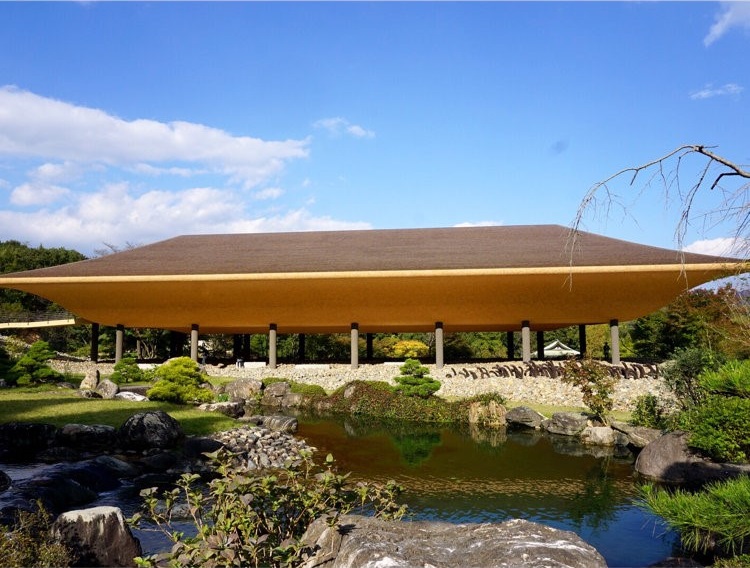
New Akasaka “Guest House” establishment plan
In Tokyo, the capital city, we will establish the highest hospitality facility in Japan, which combines the best of Japanese culture.
And the people from overseas can experience Japanese techniques and spiritual traditions.
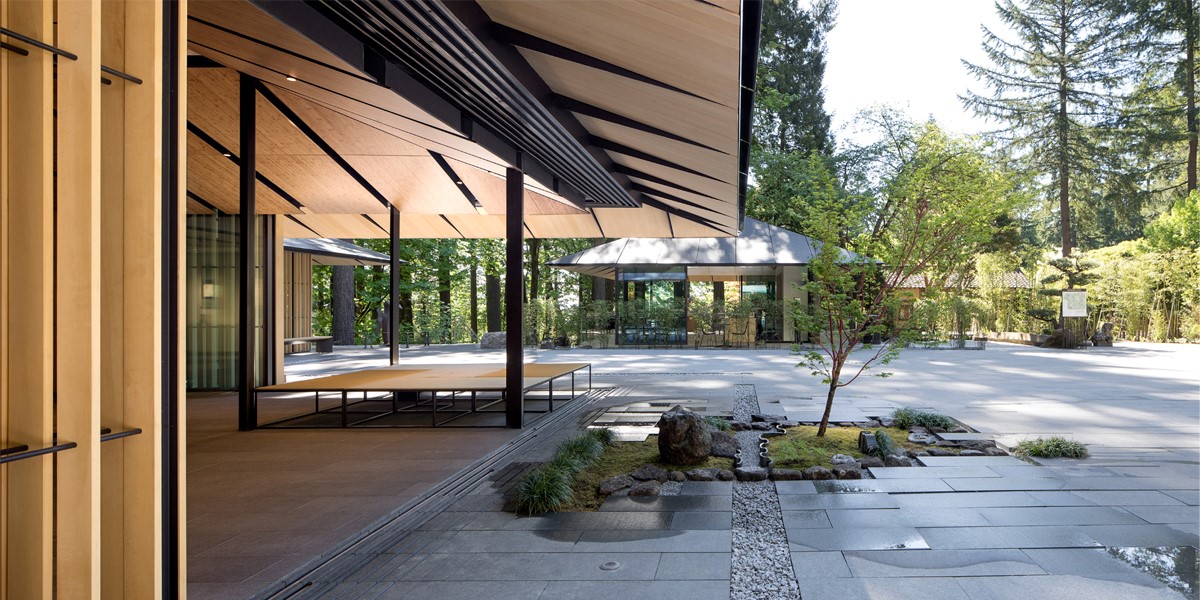
New Kyoto “Guest House” establishment plan
We will estblish a new guesthouse in Kyoto, the ancient capital of Japan.
And the people from overseas can experience traditional arts and hospitality of Kyoto, etc.
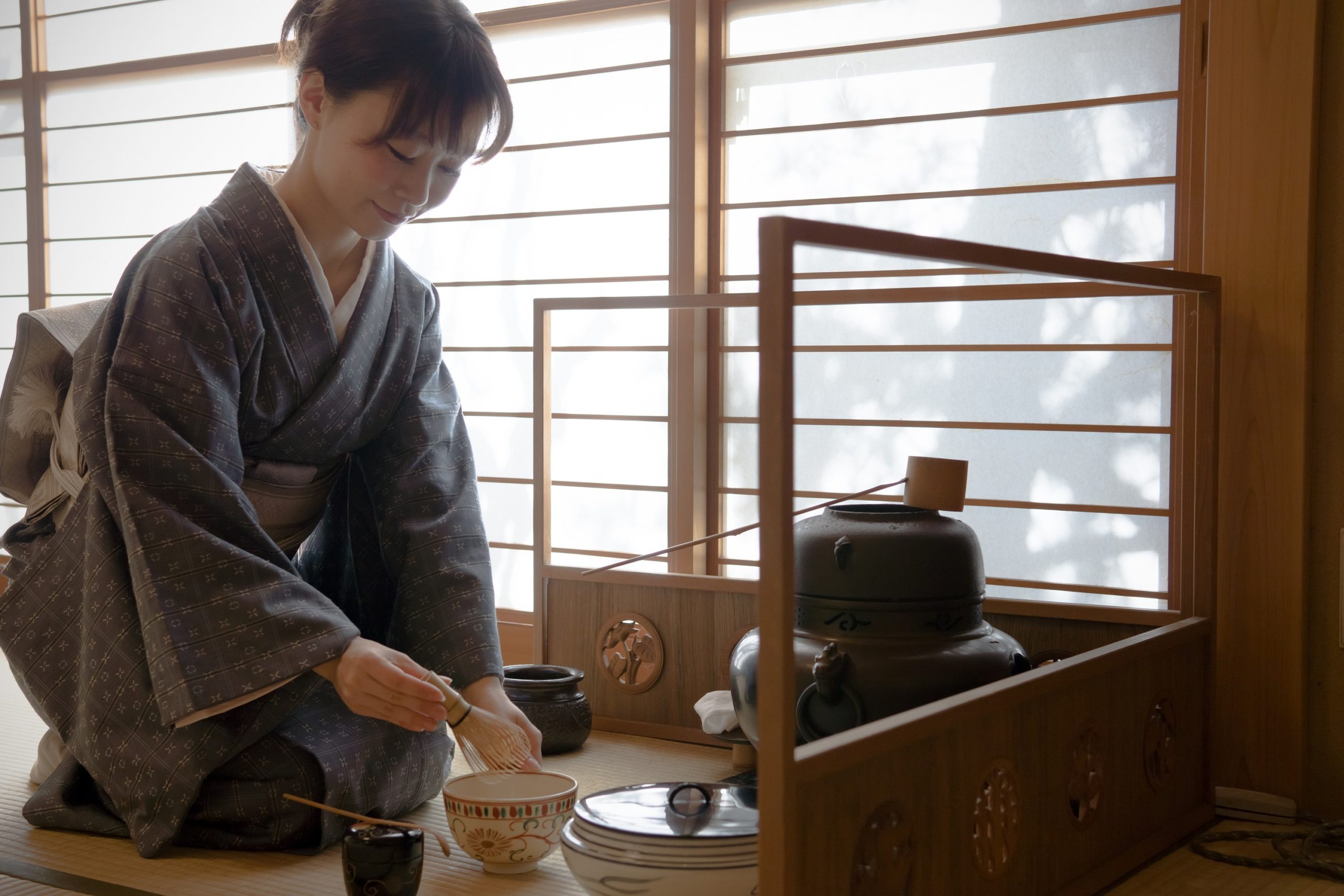
Hospitality
・ The facility where overseas people can experience the best Japanese spirit of culture.
・ The main elements of Japanese culture centralizes in this facility.
・ Realizing “hospitality” that is not possible with government facilities and general hotels.
・Providing a helicopter shuttle service between the airport and the facility.
・Affirming the complete security and strict privacy protection
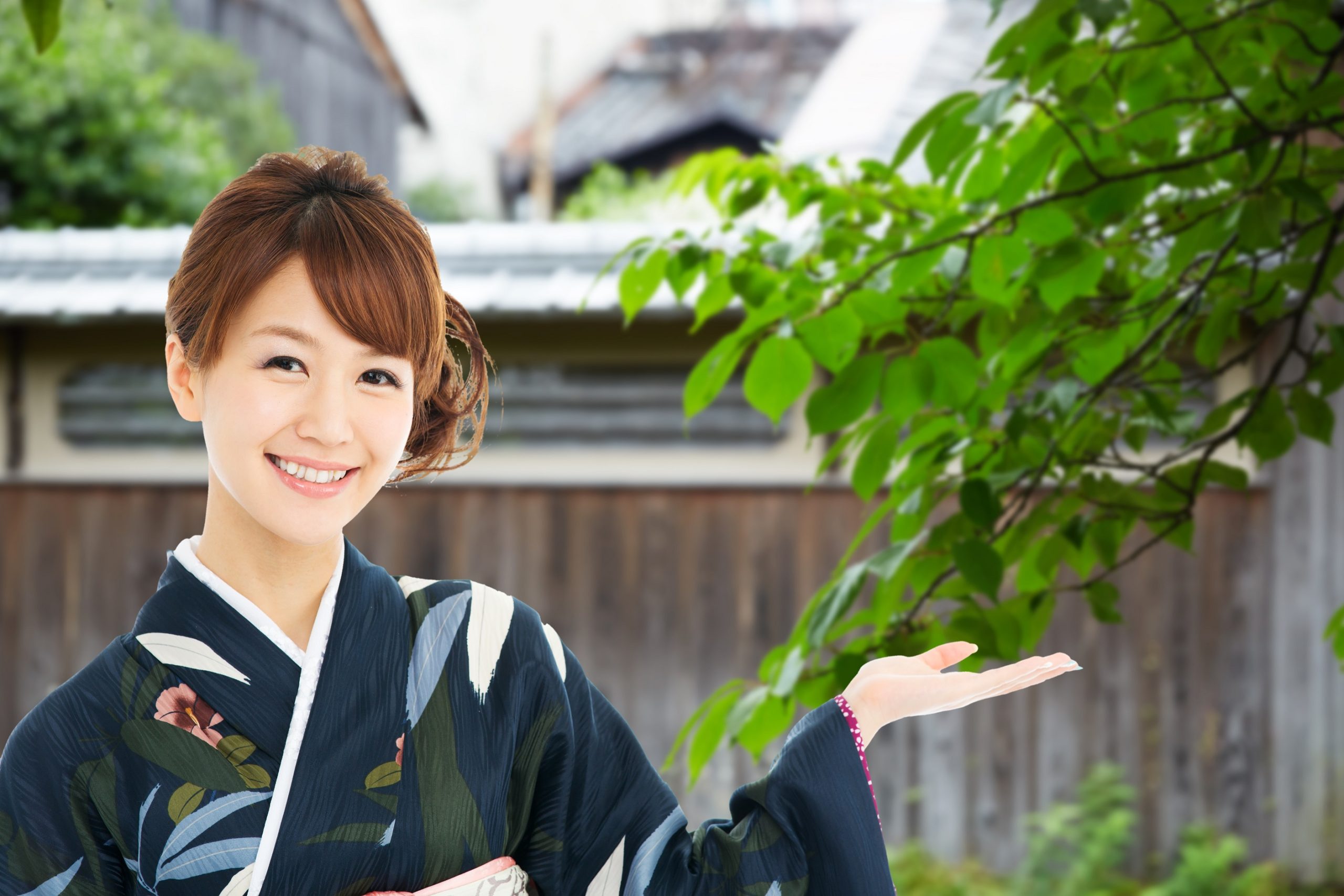
・ Providing concierge services that enable all the usual impossibility.
・ A fusion of 6-star class facilities and hotel services that incorporate with Japanese style.
・Full-scale equipment to satisfy for tea ceremony, flower arrangement, Nou, Kabuki
・ Japanese style restaurant and restaurant that offers with the best domestic ingredients.
・ An exhibition facility for craftsmanship and works and a kimono salon, etc.
Background of this business and future perspective
Background
・ Government support plan for international communication of Japanese culture and Cool Japan promotion.
・ Rapid increase in overseas visitors / Assuming 40 million annual visitors in 2020.
・ Hotel shortage /for state guest class, international celebrities or VIP-only hotels.
・ Increasing international interest in Japanese culture and task of the preservation of Japanese culture
・ New planning for Japan / Necessity of clarification of Tokyo’s international positioning.

Perspective
・Overwhelming supply shortage in Japan.
・It is possible to become a new information transmission base by gathering international wealthy people.
・Performs a functionality of supreme cultural center that gathering the best Japanese culture.
Providing a space to fully enjoyable for the four seasons and the Japanese culture of spirit.
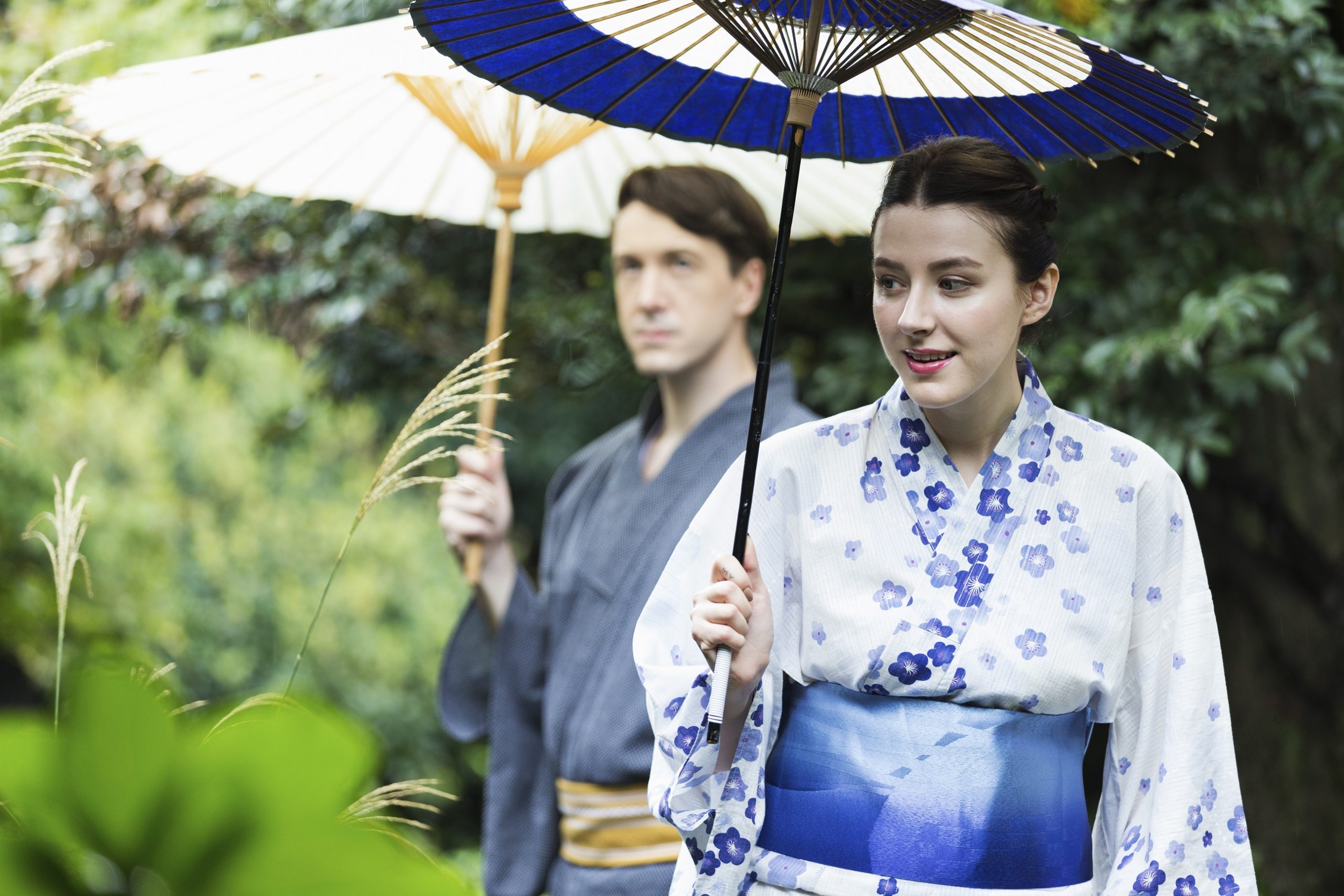
Creating new value
We will realize the world’s best “hospitality”
and an ideal fusion of traditional Japanese beauty and the functionality of cutting edge facility.
Gathering the know-how of Japanese culture style and Western VIP reception style.
Hotel・service 
Membership spa & Beauty Salon 
Membership restaurant & bar 
Private entertainment 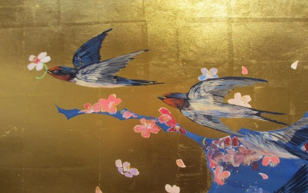
Art gallery 
First-class Japanese culture experience 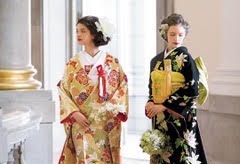
Kimono dressing experience 
Traditional furniture & Craft salon
Support
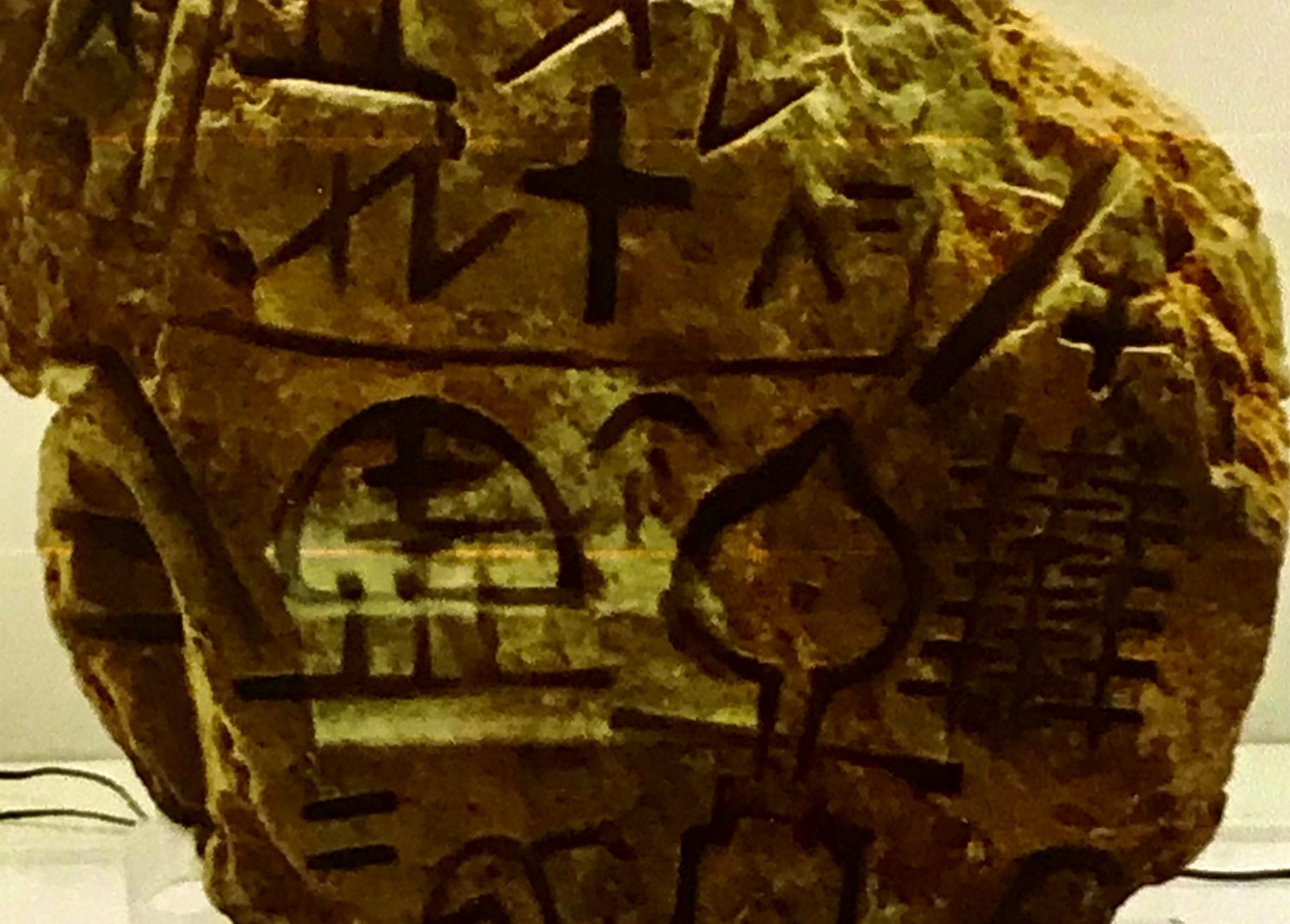
Academic research
We support academic research including archeology
and clarification of ancient civilization

Operation of scholarship system
◆ Supporting the establishment of “Japanese Cultural Studies” at major universities around the world.
◆ Targeting Japanese culture, deepen understanding and recognition of the deep spirituality of Japanese culture,
contribute to the international dissemination of universal values that underlie Japanese culture and the succession of development.
◆ Training specialists in Japanese culture studies,
Try to cultivate diverse and excellent human resources who are deeply shaped in Japanese culture
Proactively develop excellent human resources that familiar with Japanese culture and pro-Japanese group active in the international community.
◆ Promoting study abroad in Japan by excellent human resources from all over the world
and establishment of scholarships and researcher system, dispatch of excellent human resources to international organizations.
Network globalization of Japanese culture research institutes

 | University of Oxford http://www.ox.ac.uk/ |  | Pantheon-Sorbonne University http://www.pantheonsorbonne.fr/ |  | University of Bologna https://www.unibo.it/it |
 | University of Cambridge https://www.cam.ac.uk/ |  | Humboldt University of Berlin https://www.hu-berlin.de/de |  | Ludwig Maximilian University of Munich https://www.uni-muenchen.de/ |
 | Leiden University https://www.universiteitleiden.nl/ |  | National University of Singapore http://www.nus.edu.sg/ |  | Peking University https://www.pku.edu.cn/ |
 | The University of Melbourne https://www.unimelb.edu.au/ |  | Stanford University https://www.stanford.edu/ |  | The University of Chicago https://visit.uchicago.edu/ |
 | The University of Buenos Aires http://www.uba.ar/ |  | Harvard University https://www.harvard.edu/ |  | Yale University https://www.yale.edu/ |
 | University of São Paulo https://www.usp.br/ |
| University of Oxford http://www.ox.ac.uk/ | | Pantheon-Sorbonne University http://www.pantheonsorbonne.fr/ |
| University of Cambridge https://www.cam.ac.uk/ | | Humboldt University of Berlin https://www.hu-berlin.de/de |
| Leiden University https://www.universiteitleiden.nl/ | | National University of Singapore http://www.nus.edu.sg/ |
| The University of Melbourne https://www.unimelb.edu.au/ | | Stanford University https://www.stanford.edu/ |
| The University of Buenos Aires http://www.uba.ar/ | | Harvard University https://www.harvard.edu/ |
| University of São Paulo https://www.usp.br/ | | University of Bologna https://www.unibo.it/it |
| Ludwig Maximilian University of Munich https://www.uni-muenchen.de/ | | Peking University https://www.pku.edu.cn/ |
| The University of Chicago https://visit.uchicago.edu/ | | Yale University https://www.yale.edu/ |
What is the true purpose of investigation for Japanese culture?
The human history has been characterized of fierce survival competition or conflict for the survival of people and nations, the history of territories and wars of resource acquisition.
However, with the evolution of civilization, we recognized that human beings can only survive by protecting and sharing the limited resources of this small planet called the earth.
In addition, for humankind who possessed nuclear weapons, a all-out war means their own destruction.
For that, the only survival possibility for humankind is to open up a civilization of coexistence and co-prosperity to the global environment, humans, and human society.
It is a requirement for us to to establish a “common sense of value (= ideal)” that is the basis of such a new civilization.
The definition of “Civilization” and “Culture” in here.
“Civilization” means the lifestyle of a multi-ethnic, multi-lingual human community that transcends global and ethnic traits and shares specific technologies, values, and social systems.
On the other hand, “culture” refers to a lifestyle characterized by values and spirituality unique to a certain region, group or ethnic group.
That is, as long as we say “Japanese spiritual culture” in the category of “Japanese culture”, it’s just a story about the Japanese unique lifestyle and it can be said that the ripple effect on the entire human society.
For that we need to establish it more universal as“value” or “ideal”and common to all human beings that the international community can share.
For that purpose, rather than submitting this proposal only from Japan.
Ideally, our proposals should be sent out independently as original research results based on values of sensitivity and spirituality from people of different ethnicities and nations in each region of the world.
Therefore, under the academic support of researchers, various elements of Japanese culture can be studied freely and independently. According to this sturdy and discussion we contribute to the permanent progress and harmony of human society.
We aim to build a network of international research institutes that can announce and evaluate each research result, and to establish a system for awarding evaluations.
Promotion of international business
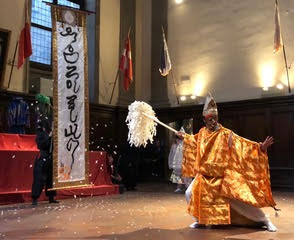
We support activities to disseminate Japan’s diverse traditional arts to the world as “Sosei Kagura-K A G U R A-“

・We transmit to the world regarding the authentic history of Japan and its spirit and ideals with the KAGURA title.
・Project Phoenix [Project Phoenix]=
The movement connects to the world heritage sites and religious sacred sites that promotes efforts toward the realization of a new ideal society in harmony with the global environment centered with local people.
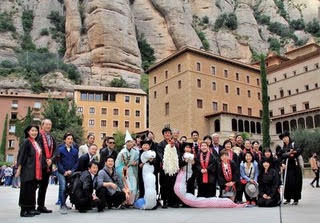
・Performs “Sosei Kagura” around the world as part of cultural exchange to create a new spiritual culture for humanity.
・To establish the public opinion of “cultural country = Japan”, we promote cooperation with local public bodies and cultural groups.
And we develop activities aimed at creating a universal art culture that can be shared for people all over the world.
Development
Establishment of World Cultural Comprehensive Digital Data Center (WDC)

What is a comprehensive digital data center?
★ Not only Japan but also the world’s major cultural heritage, ancient documents, books, works of art such as famous paintings, sculptures and music are recorded in ultra-high resolution digital data. Establish a center that centrally manages the backup data and manages the constant maintenance and download service.
★ It is possible to always view the most important humanities’ original data in human history in perfect resolution, and if requires it can provide the perfect restoration.

★By connecting to this comprehensive data center online,
universities and research institutes, national libraries, museums and galleries around the world can search and browse original data.
★Because this comprehensive digital data center is located in Japan, Japan becomes a center of international conferences and conventions related to the humanities and cultural arts.
★The existence of this data center in Japan will be the ultimate peace security symbol.
★ It is an absolute requirement for the realization of “Cultural Nation = Japan” and at the same time, determine Japan’s role and position in the international community.
Japan is the most longest history and independent civilization nation.

According to investigation the human race began to live in the Japanese archipelago at the end of the Ice Age about 40,000 years ago, and the civilization of people called Jomon, and the Jomon people had started their civilization about 16,000 years ago.
Jomon, the founder of the Japanese, was confirmed by the results of the most recent chromosome research to have a unique Y-chromosome haplogroup (D1b type) that is different from any ethnic group in neighboring Asia such as China and Korea.
Also, it was revealed that the Yayoi people, who were said to have come from around the 5th century BC, and the Kofun people, who came from around the 3rd century BC and were naturalized, had the same chromosomes as those of the Jomon people, the archetype of the Japanese. And it has come to be recognized that it is highly possible that Jomon Japanese people who were originally on the mainland of Japan had been repatriated from the continent or peninsula to the mainland due to changes in continental conditions.
This Y chromosome haplogroup D1b type is an extremely early mutation in humans branched from Africa, and Asian, Middle East, and European races have the type of chromosome that was mutated much later. In that sense, we might be thought that Japan is able to be a suitable place for studying the traditional culture, history, and civilization of humankind, as well as a new civilization of human society.
From the above research results, it became easier to gain an international consensus that Japan is the most suitable place for the preservation of data related to the culture of all humankind and the future.